

This Animation Taught Me More Than Philosophy Books
What Naruto Revealed About Love, Pain, and Being Human

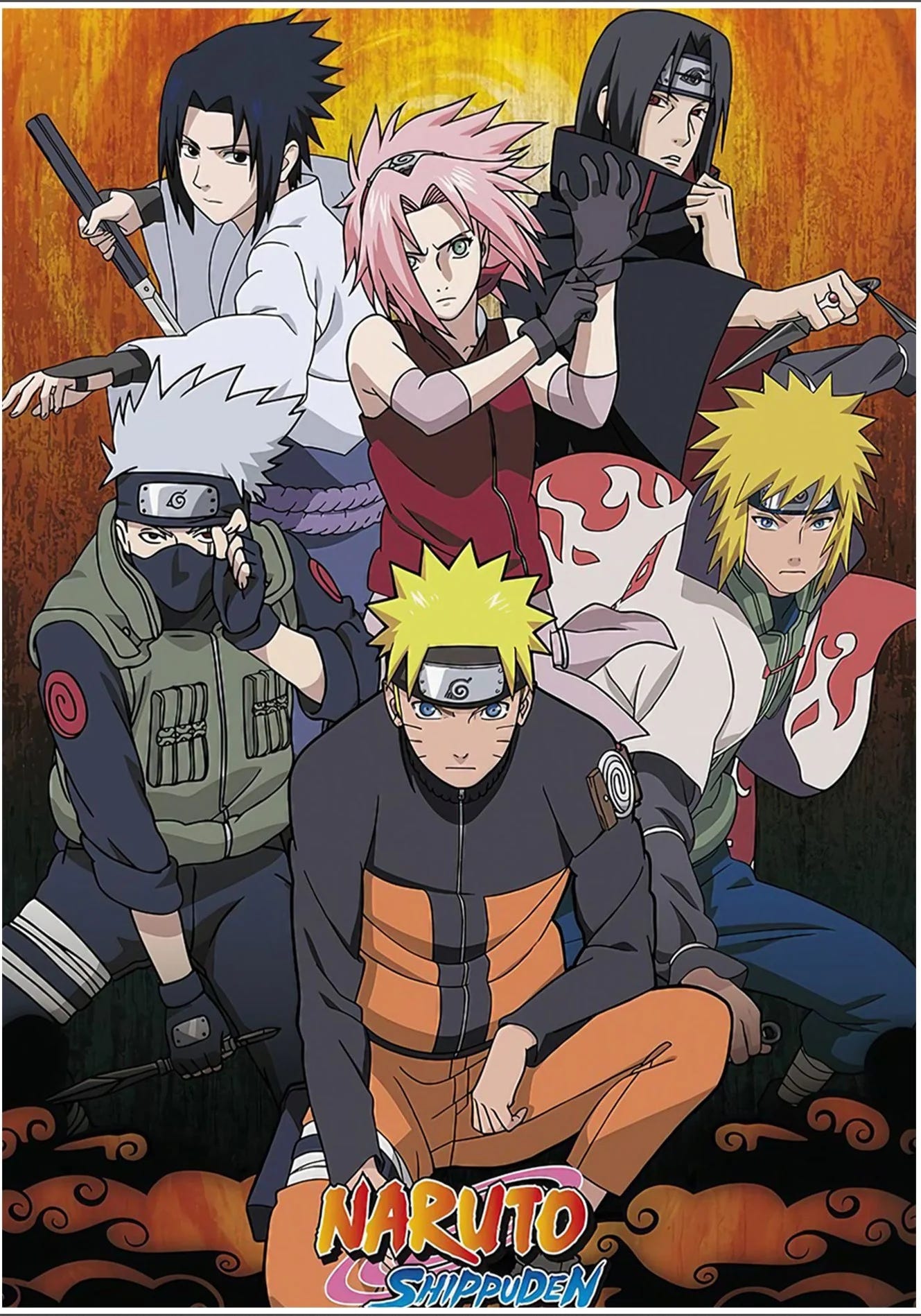
Recently, I started rewatching Naruto, a Japanese manga series about a lonely, rejected boy with a demon fox inside him who refuses to give up on his dream or on connecting with others, ultimately proving that the bonds we forge through pain and understanding are what transform both people and the world.
I told myself I’d watch two episodes, just enough to scratch the nostalgia itch, and maybe I’d smile at the old animation style, cringe a little at the dialogue I once thought was profound, and move on with my adult life. Instead, I got pulled in completely.
The same anime that once consumed me twenty years ago still has the power to move me deeply, unexpectedly, and with even more force than before. Except now, the tears come for entirely different reasons.
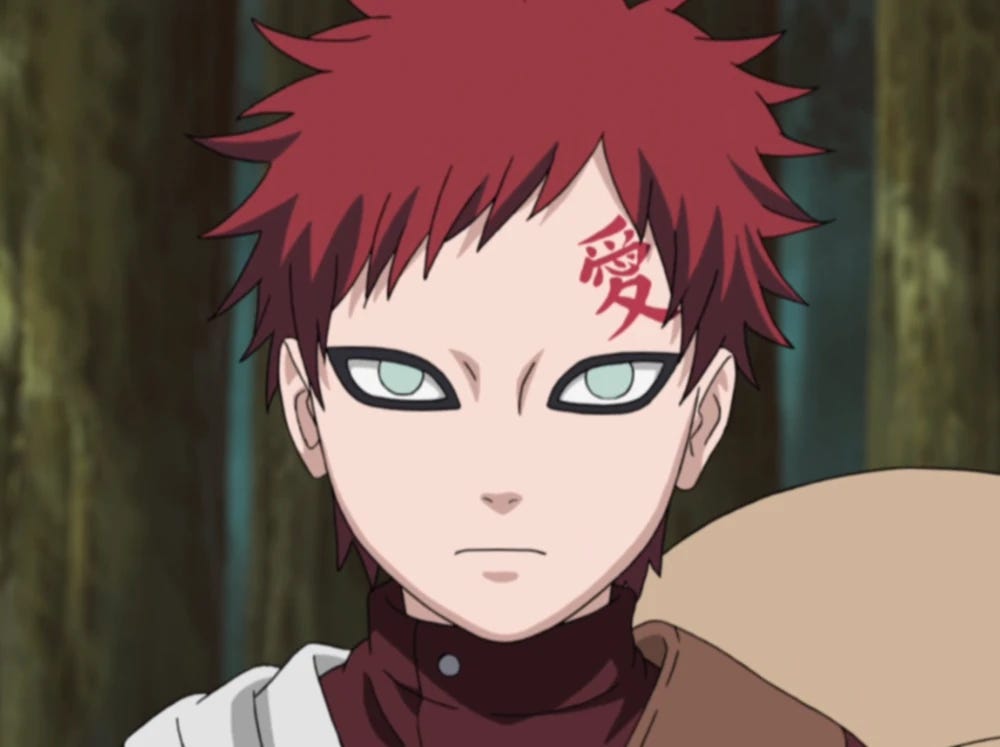
Twenty years ago, I was a rebellious schoolgirl in China, sharp-edged and defensive, carrying anger like a badge of honour. Back then, I was obsessed with the character Gaara, the boy with the monster inside him, the one everyone feared and no one loved.
I loved everything about him. The blood-red “愛” (love) carved into his forehead like a wound that wouldn’t heal. His almost painfully edgy declaration that became my personal manifesto: “I love only myself. I fight only for myself.” I designed my wardrobe around his aesthetic: oversized hoodies, dark colours, anything that said “stay away.” I plastered my bedroom walls with his posters until my mother complained she couldn’t see the paint anymore.
To understand why a teenage girl in early 2000s China would identify so completely with a fictional character who literally murdered people, you need to understand what those school years felt like.
It was pressure-cooked intensity from dawn until midnight. Academic stress that made your stomach hurt before every exam. Adolescent hypersensitivity that turned every sideways glance into a personal attack. The constant, exhausting sense of not being understood: not by parents who only asked about grades, not by teachers who saw you as a test score, not even by classmates who were all fighting their own survival battles.
The Chinese education system wasn’t designed for emotional development but for competition, for ranking, for separating the “successful” from the “failures” with brutal efficiency. Ever since primary school, we were already being told that our entire futures hinged on pure exam scores. That love, friendship, creativity… all of it was secondary to academic achievement.
Adults felt distant, speaking a language of expectations I couldn’t translate into anything that felt like care. Teachers felt transactional because their interest in us began and ended with our performance. Even my parents, who I knew loved me in their way, seemed unable to see past the grades to the person underneath who was quietly suffocating.
So I did what Gaara did. I built my own “absolute defence.”
I convinced myself that if I became strong enough, cold enough, untouchable enough, no one could hurt me. If the world felt hostile, I would push it away first. If people were going to misunderstand me anyway, I’d give them something to misunderstand: a carefully constructed persona of indifference and barely contained rage.
The irony, of course, is that Gaara’s sand shield was involuntary — a manifestation of his mother’s love, protecting him even after death. Mine was deliberate. I was choosing loneliness and calling it power.
But real life didn’t respect my isolation arc. People kept breaking in, not dramatically like Naruto punching through Gaara’s sand, but quietly, persistently, in ways I couldn’t defend against because they didn’t feel like attacks.
There was the classmate who patiently explained math problems to me during lunch breaks, never once making me feel stupid for not understanding. The friend who dragged me out to internet cafés when I was drowning in homework, insisting that I needed to breathe and have fun like normal kids. The group of girls who whispered about life, dreams, and fears during late-night study sessions, creating a small pocket of honesty in a world that demanded performance.
They didn’t announce themselves as my Naruto and give speeches about friendship or make grand gestures. They just... showed up. Consistently. Without asking for anything in return.
Slowly, reluctantly, I realised my sand wall wasn’t as solid as I pretended. The cracks were already there, and part of me, the part I was most afraid of, was relieved.
Worse, or maybe better, I didn’t actually want the wall to be impenetrable. What I wanted, what I was desperately waiting for without knowing it, was someone reckless enough to slam headfirst into my defences and say: “You’re not alone. You never were.”
I wanted permission to stop performing strength and admit I was tired.
As the kids in the anime kept getting hurt, kept forming bonds despite the pain, kept choosing connection over safety, I was doing the same in real life. Shedding my armour piece by piece. Learning that vulnerability wasn’t weakness, but the only path to anything real.
Only much later, years after I’d moved away from home, after I’d built a life that looked nothing like what my teenage self imagined, did I understand the deepest truth about Gaara’s character:
The word “love” carved into his forehead was never meant to be a weapon against the world. It was an invitation to love this world despite everything it had done to him.
Twenty years later, I’ve learned how to navigate the adult world. I know how to calculate risks and benefits. How to compromise without losing myself entirely. How to weigh outcomes, manage expectations, and protect my interests. I’ve become competent, functional, and successful by most conventional measures.
And yet, when I rewatch Naruto now, I feel an even heavier kind of fire burning in my chest.
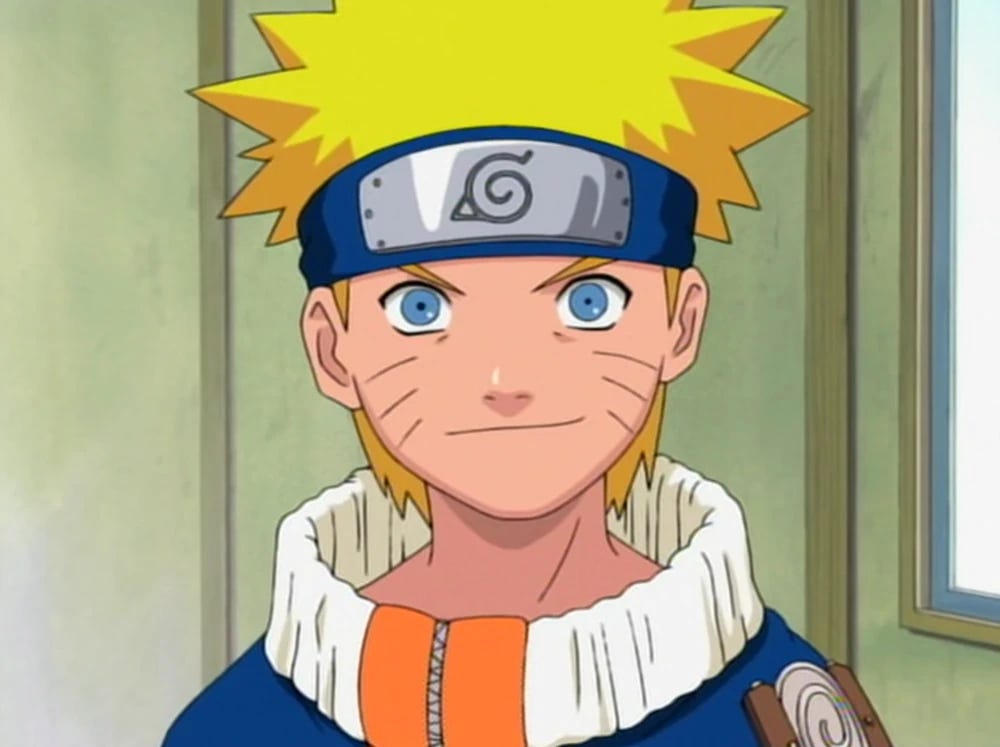
What once looked like “main character privilege”: Naruto’s seemingly inexplicable optimism, his refusal to give up on people who’d hurt him, his ability to forgive the unforgivable, now feels like a miracle. Not the supernatural kind, but the human kind that requires daily, exhausting choice.
Naruto grew up surrounded by cruelty and neglect. The village treated him like a monster. Adults looked at him with fear and disgust. He had every reason, every justification, to turn bitter, to become the villain of his own story.
But he didn’t. He chose to love the world anyway. Not because it was easy and the world earned it, but because the alternative, becoming like Pain and Obito, meant letting the cruelty win.
Jiraiya’s death used to feel like narrative necessity — the mentor dies so the hero can grow, a tale as old as storytelling itself. I cried when it happened. Now, watching him sink beneath the waters of Amegakure, smiling through regret and pain, writing one last message with the strength he has left, it hits differently. I finally understand that the most powerful form of courage in adulthood is this: seeing life clearly, and choosing to love it regardless.
Jiraiya died knowing he’d failed in so many ways. He never became Hokage, never stopped Orochimaru’s descent into darkness, and never told Tsunade how he really felt. His greatest student, the one he believed would change the world, became the very enemy he died fighting. And yet, in his final moments, he smiled. He thought of Naruto. He believed, despite everything, that the story would continue, that love would find a way, that his life had mattered.
That’s the hardest, most radical form of hope, the kind that exists because giving up would mean the suffering was for nothing.
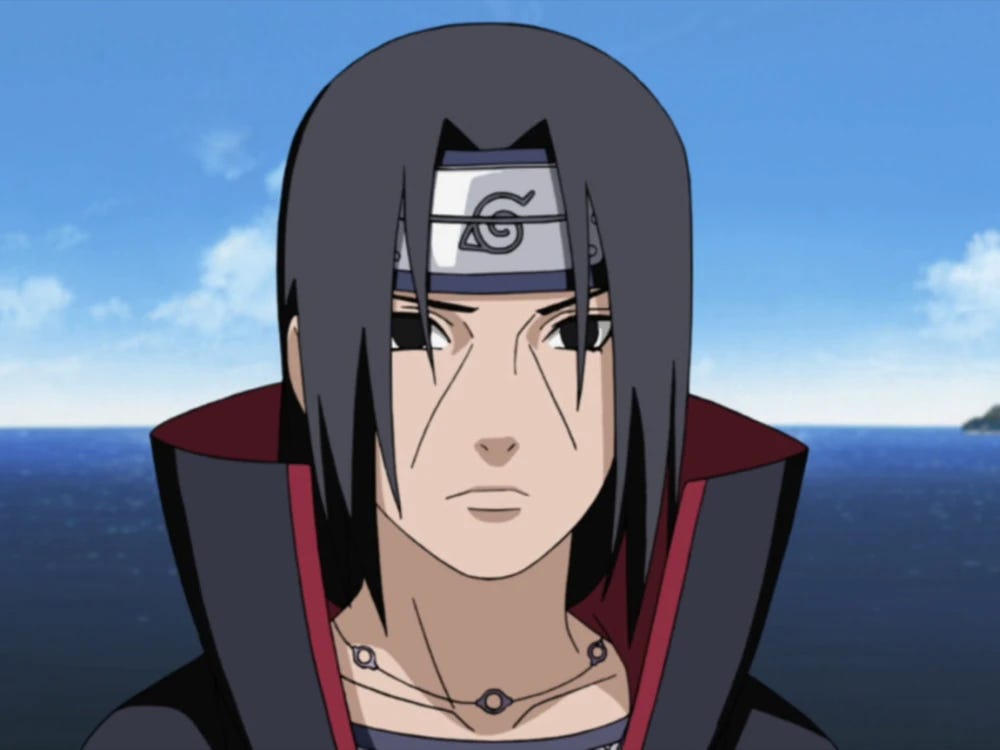
I now understand Itachi’s suffocating and distorted devotion: how love can become so twisted by impossible choices that it turns into the very thing it was trying to prevent; how you can destroy everything you care about in the name of protecting it, and how the weight of secrets can crush you slowly, turning every breath into an act of endurance.
I understand Obito’s desire to destroy the world after losing the one person who gave it meaning. I understand how grief can calcify into rage, how the absence of love can feel more unbearable than the presence of pain. I understand why someone would choose to burn everything down rather than live in a world that took away their reason for living.
I understand the unbearable weight behind Pain’s words: “Feel pain. Think about pain. Accept pain. Know pain.” It was a cry from someone who had carried too much, alone, for too long. Someone who believed that if he could just make the world hurt the way he hurt, maybe then they would understand. Maybe then they would stop.
They’re what happens when pain doesn’t find connection, when trauma doesn’t find healing, when people are left to carry impossible burdens without support. They’re the person I could have become if the right people hadn’t broken through my defences.
I’ve read Camus and his absurdist rebellion, studied Buddhist teachings on suffering and attachment and highlighted passages in Frankl’s Man’s Search for Meaning about finding purpose in pain. I’ve nodded along to Stoic wisdom about controlling what you can and accepting what you can’t.
All of it was intellectually compelling, but none of them changed me as Naruto did. Because philosophy, for all its brilliance, often speaks to the mind while bypassing the heart. It offers frameworks and arguments, logic and reason. It tells you what to think but rarely shows you how to feel.
Naruto did what those books couldn’t: it made me feel the truth before I could intellectualise it and showed me that pain is universal, but isolation is a choice. It taught me that love isn’t a weakness to be overcome or a distraction from more important things. Love, even sometimes messy, complicated, and painful, is the entire point. It’s what makes us human. It’s what makes suffering bearable. It’s what transforms survival into living.
Maybe that’s why Naruto stays with me, across decades and continents, across cultural differences and language barriers. Because underneath all the ninja battles and supernatural powers, it keeps asking the same question, over and over, in a hundred different ways:
When the world wounds you, misunderstands you, or abandons you, do you build higher walls, or do you risk opening your heart again?
It’s the question every hurt person faces. Every betrayed friend. Every disappointed child. Every adult who’s learned that trust is dangerous and vulnerability is a liability.
Do you become Gaara before he met Naruto, isolated, defensive, hurting others before they can hurt you?
Do you become Pain, trying to force the world to understand through shared suffering?
Do you become Obito, rejecting reality entirely in favour of a fantasy where no one gets hurt?
Or do you become Naruto, someone who knows pain intimately, who has every reason to give up, and who chooses connection anyway?
Twenty years ago, I chose defence and isolation. I don’t regret it entirely. That armour protected me when I needed protection, and that isolation gave me space to figure out who I was beneath everyone else’s expectations. That defensive stance taught me I could survive on my own.
But survival isn’t the same as living.
Twenty years later, I understand this: True strength isn’t about never getting hurt. It’s about knowing the pain is inevitable and choosing love anyway.
It’s about being like Naruto.
In our modern world, isolation is easier than ever. We can curate our social media to show only what we want people to see and ghost people who make us uncomfortable. We can build entire lives that look successful from the outside while remaining fundamentally disconnected on the inside.
We’re encouraged to be self-sufficient, to not “need” anyone, to treat relationships as optional accessories to an already complete life. Vulnerability is rebranded as “oversharing.” Asking for help is seen as a weakness. Emotional honesty is considered unprofessional, inappropriate, or simply too much.
We’re all building sand armour, just with more sophisticated materials.
But here’s what Naruto understood that our culture often doesn’t: We’re not meant to do this alone. We’re not designed for isolation. The strongest people are re the ones who build communities, who create bonds, who risk rejection and heartbreak because they know that connection is worth it.
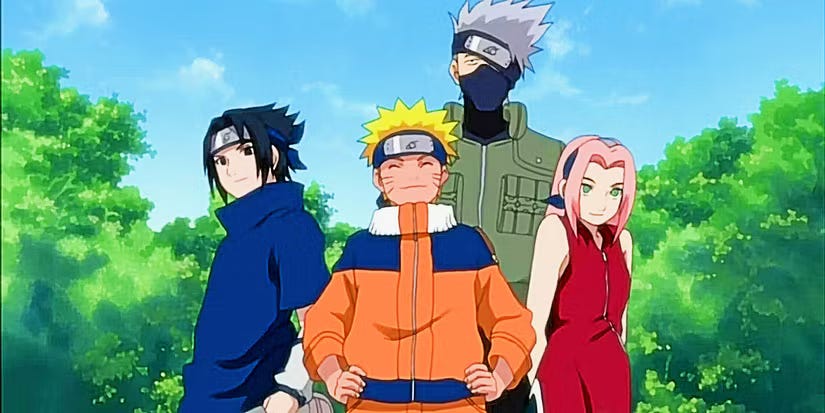
Every meaningful relationship in Naruto was forged through shared pain and mutual vulnerability. Naruto and Sasuke. Kakashi and his students. Even the relationship between Naruto and Kurama, the demon fox inside him, transformed from hostility to partnership through understanding and respect.
None of these connections were easy. All of them required someone to take the first step, to extend trust before it was earned, to believe in the possibility of change.
The only question is: What will you do with that pain?
Will you let it build walls, or will you let it build bridges?
Will you use it as an excuse to close off, or as a reason to reach out?
Will you become the villain of your own story, or will you be someone’s Naruto, the person who shows up, who refuses to give up, who believes in connection even when it seems impossible?
The most radical, rebellious, powerful thing you can do in a world that encourages isolation is to build genuine relationships. To spread love not as an abstract concept but as a concrete action. To be the person who breaks through someone’s sand armour and reminds them they’re not alone.
Because that’s what saved me, what saved those “villains” in Naruto, and that’s what saves all of us, in the end: Just people. Imperfect, struggling, beautifully human people choosing to show up for each other.
So beautifully written. I watched Naruto for the first time when I was 6, and it didn’t have much of a literal impact on my personality. I began rewatching it in 2025, at 18 and it completely changed my outlook on life and my personality. I genuinely strive in my life everyday to be like Naruto, he’s not only motivational but he helped me love myself and rid myself of the insecurities I had. I have autism, and so, I related heavily to the shame and insults that Naruto experienced from his peers. Seeing how he was able to overcome that motivated me to do the same.
Very moving Camellia to have bared your soul,
No one wants to see a fellow writer go through and relive such past emotional trauma.
Don't worry you have many friends that : 爱你,因为你就是你。
Gosh this caught me by surprise. You could of knocked me down with a feather!
Please take care CY