Beyond Gender
From Plato's Spheres to Bowie's Stardust

6th July 1972, Britain. Countless families sat gathered round their television sets, watching the BBC’s Top of the Pops.
Suddenly, a creature appeared on screen.
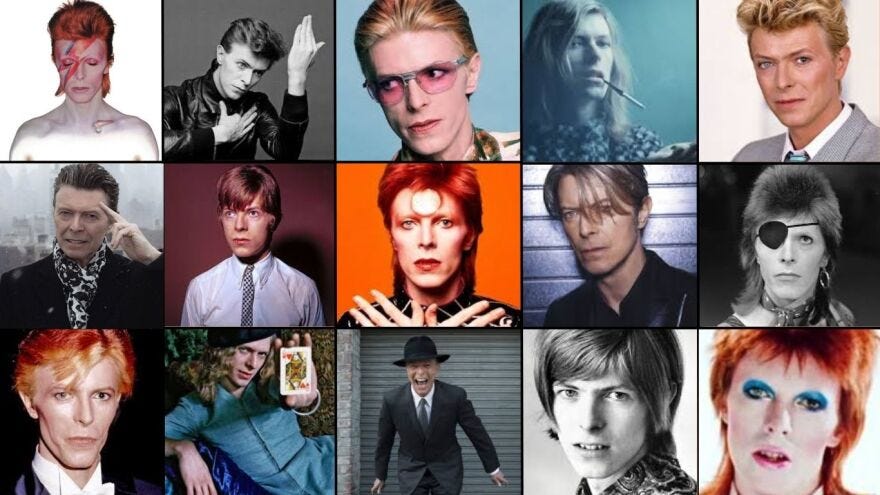
He had a shock of flame-red hair, gold paint smeared across his eyelids, and wore a skin-tight jumpsuit covered in geometric patterns that looked as though it had been stolen from some futuristic laboratory. He draped his arm around guitarist Mick Ronson’s shoulder, fixed the camera with a gaze so ambiguous it bordered on provocative, and sang that song: Starman.
That was David Bowie. Or more precisely, that was his phantom: Ziggy Stardust.
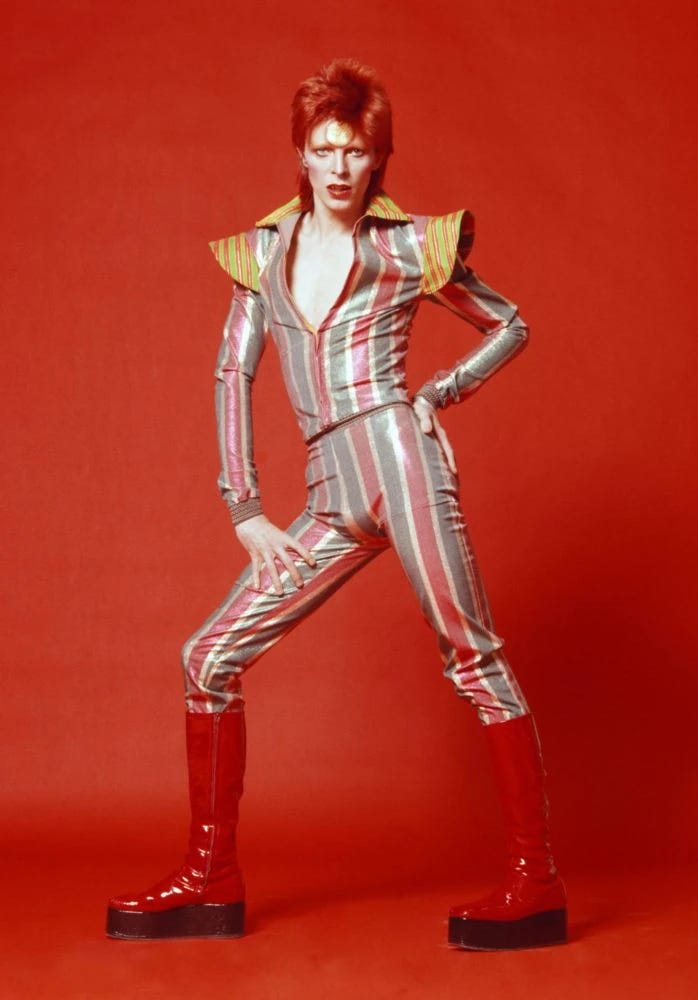
In that moment, parents across Britain felt a certain unease, a sense of threat. But those children watching, the ones who felt stifled, who didn’t quite fit in, felt under the gaze of those mismatched eyes, an unprecedented freedom.
People cried out: “Is he a man or a woman?” “Is he an alien?” This panic proved precisely that Bowie had struck the most sensitive nerve in human civilisation: gender.
When we discuss Bowie today, we inevitably mention one term: “androgyny”. But half a century on, this word has been rather overused. For Bowie, it was never simply about “cross-dressing”, nor was it a publicity stunt designed to grab headlines. It was a war to reclaim “complete humanity”, an archaeological dig into the very essence of human existence.
To understand the profundity of this beauty, we cannot merely flip through fashion magazines. We must turn to philosophical fragments from over two thousand years ago.
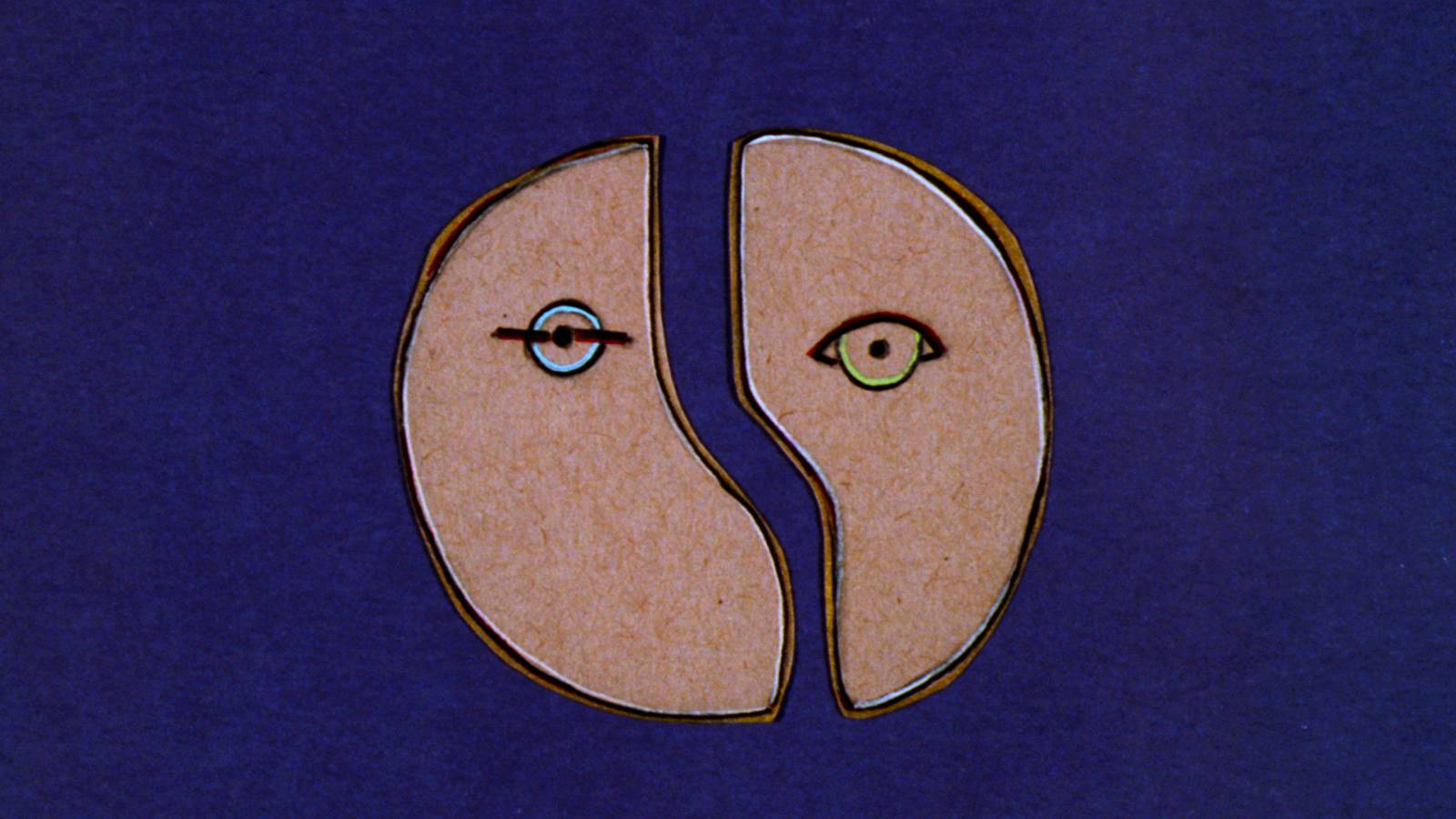
In Plato’s Symposium, the ancient Greeks left us with a deeply romantic yet tragic hypothesis: humans were not always as we are now. Originally, people were “spherical”, with four arms, four legs, and two faces. Most crucially, they were unified in gender.
Because these spherical beings were so powerful, they even dared to challenge the gods. Zeus, in his fury, split them in two. From that moment, we became lonely semicircles. We spend our entire lives jostling through crowds, searching, colliding, essentially trying to piece ourselves back into that original, perfect, complete state.
Bowie’s genius lay in forcibly stitching those two semicircles back together within the dimension of visual art.
When you watch him in the Life on Mars? video wearing that ice-blue suit with bright blue eyeshadow, what you experience isn’t “dislocation” but a profound sense of “coherence”. This aesthetic carries a certain oppressive force because it challenges the castrating logic that “men must be stoic, women must be delicate”.
Through this ambiguity, he declared to everyone: Beauty recognises no camps; the soul has no gender. The breathtaking power he displayed on stage came precisely from his refusal to be “castrated” by socially defined gender roles. By transforming himself into an “outsider”, he paradoxically touched upon the most fundamental human commonality: a nostalgia for original wholeness.
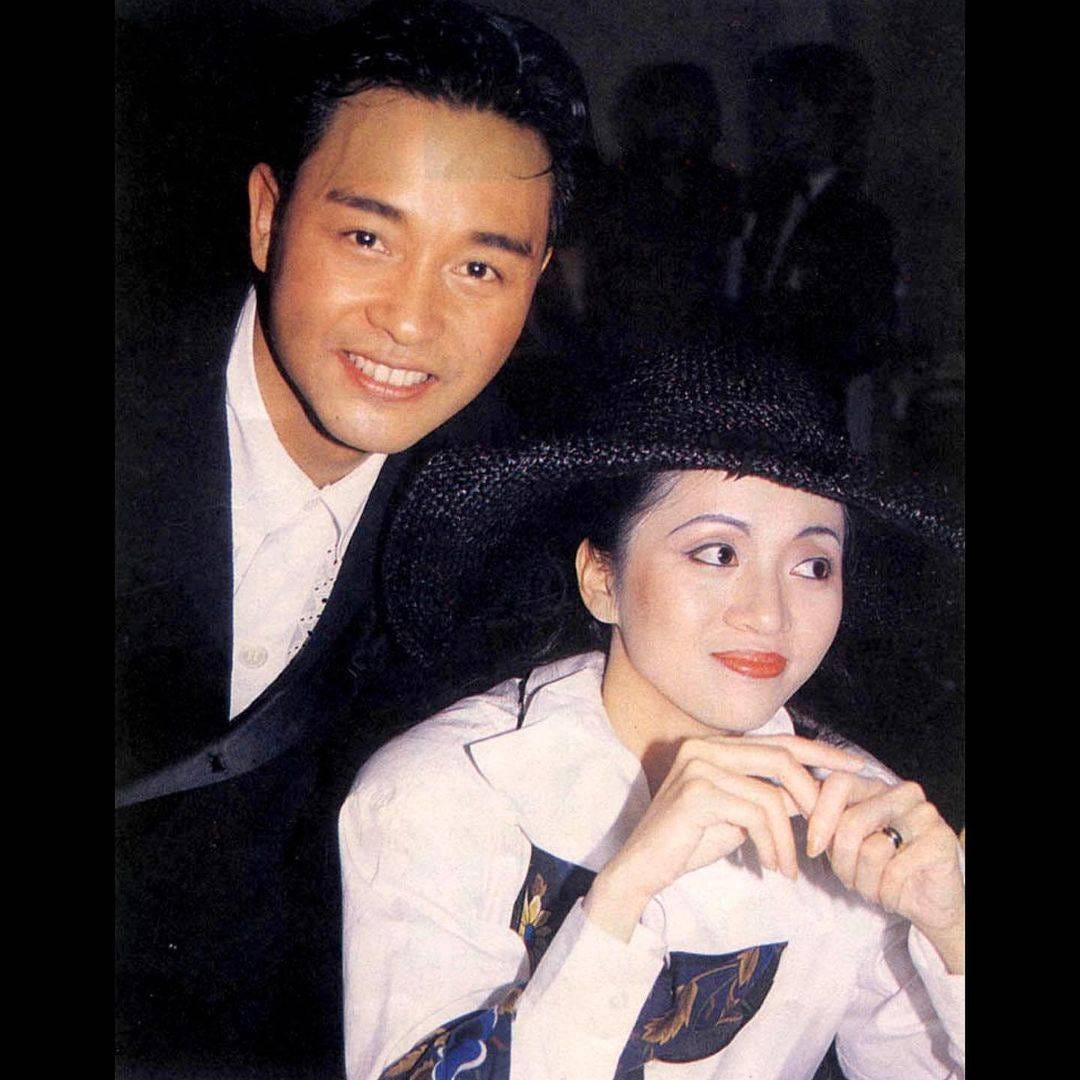
This androgynous tension wasn’t exclusively Western. During the same period in the East, other souls were conducting similar experiments.
If Bowie was the West’s chameleon, then Anita Mui was the East’s queen of transformation. Throughout the 1980s and 90s, Anita Mui challenged Hong Kong’s conservative gender norms, appearing at concerts and public events in sharp men’s suits with slicked-back hair, exuding an unmistakable heroic bearing. Her presence wasn’t “imitating men” but revealing the suppressed, iron-hard aspect of female vitality. She proved that feminine tenderness and masculine gallantry could resonate within the same body.
Leslie Cheung went even further. At his 2000 Passion Tour concert, he enlisted Jean Paul Gaultier, who had previously designed for Bowie. He grew his hair long and wore backless, sequinned gowns. In that performance, he became an entity embodying both angel and demon.
Sadly, the media response was brutally harsh. They labelled his avant-garde presentation as “transvestism”, unable to accept that a man at the pinnacle of power would voluntarily relinquish “masculine armour” to embrace what was perceived as weak femininity.
But like Bowie, Cheung pursued a kind of “pansexuality”. His philosophy was clear: he would not hide who he was, choosing instead to live authentically for the life he loved. That life meant refusing to cruelly amputate half of one’s soul to conform to society’s gendered aesthetics.
Why does androgyny provoke such discomfort? Because it disrupts society’s underlying code: power.
In traditional binary societies, gender labels function as the most efficient tool for distributing power. Men are assigned “rationality, logic, dominance, aggression”; women are assigned “emotion, intuition, compliance, nurturing”. It’s like a tightly woven net, imprisoning each person from birth within their designated box.
When you choose to blur gender, you’re actually questioning the entire system.
Take Tilda Swinton, for example. In the film Orlando, she played a character who traversed four centuries, changing gender at will. Such people become mirrors. When you look directly at their faces, faces that defy gender classification, you’re forced to bypass labels and confront their essence.
When the shell of gender falls away, what remains is pure “being”. This is Bowie’s greatest contribution to existentialist aesthetics: he showed us that one person can simultaneously be father, mother, lover, alien, and hero. If we’re no longer required to “live as a man” or “live as a woman”, might we not live more fully as “a person”?
Yet, looking back from 2026, we find ourselves in a peculiar paradox.
On one hand, our society appears remarkably tolerant, with social media awash in so-called “androgynous style” and “genderless fashion”. On the other hand, this trend has become increasingly cheap, increasingly homogeneous.
Today’s “androgyny” is often merely a fashionable veneer, packaging carefully designed to harvest clicks and engagement. Those influencer celebrities wear exquisite makeup but lack that quality Bowie possessed: that self-destructive vitality radiating from within.
We’ve killed the truly dangerous, truly subversive Bowie. We’ve turned him into a museum exhibit, printed him on fast-fashion T-shirts, and transformed him into a harmless cultural symbol.
True androgyny isn’t simply “men in skirts, women in trousers”. It’s an intellectual transgression to dare to embrace both the shadow and light within yourself, and dare to show tenderness among steel, to forge strength within softness. It demands extraordinary courage to resist a world constantly demanding you “fall in line”.
Bowie once declared, “I always had a repulsive need to be something more than human.” He refused to accept those ready-made, narrow definitions of personhood. He’d rather be an alien, a construct, a perpetual work-in-progress than a half-soul carved up by gender labels.
In 2016, Bowie returned to his Mars. When he left, he still wore his most impeccable suit, still bore his most enigmatic smile.
But the light he left behind continues to dismantle this world’s rigidity and prejudice. He showed us that beauty can be uncertain, that humanity can be infinite.
In our era that still habitually takes sides, habitually labels one another, and seeks safety in binary oppositions, Bowie’s existence serves as a continuous reminder:
Don’t go gently into that defined box. Break conventions and constraints; reveal your true self. When you no longer fear showing the other side within you, you cease being that lonely “semicircle” searching for its other half. You become that powerful, complete, spherical universe that belongs entirely to you.
As Bowie sang in Heroes: “We can be heroes, just for one day.”
And the first step to becoming a hero is reclaiming the half of yourself you’ve lost.